Cutting AI Inference Costs: From Cloud to Consumer Hardware
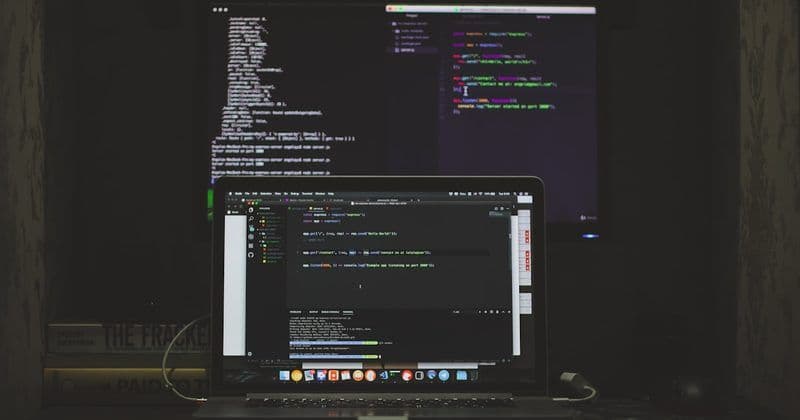
I’ve been diving deep into AI deployment optimization for the Trend Analysis project, and honestly, the economics are shifting faster than I expected. The challenge isn’t building models anymore—it’s getting them to run cheaply and locally.
Last week, our team hit a wall. Pulling inference through Claude API for every signal trend calculation was bleeding our budget. But then I started exploring the optimization landscape, and the numbers became impossible to ignore: semantic caching, quantization, and continuous batching can cut inference costs by 40-60% per token. That’s not incremental improvement—that’s a fundamental reset of the economics.
The real breakthrough came when we realized we didn’t need cloud infrastructure for everything. Libraries like exllamav3 and Model-Optimizer have made it possible to run powerful LLMs on consumer-grade GPUs. We started experimenting with quantized models, and suddenly, our signal trend detection pipeline could run on-device, on-edge hardware. No latency spikes. No API throttling. No surprise bills at month-end.
What I didn’t anticipate was how much infrastructure optimization matters. Nvidia’s Blackwell generation dropped inference costs by 10x just on hardware, but as the data shows, hardware is only half the equation. The other half is software: smarter caching strategies, better batching patterns, and ruthless tokenization discipline. We spent two days profiling our prompts and cut input tokens by 30% just by restructuring how we pass data to the model.
The team debated the tradeoffs constantly. Do we keep a thin cloud layer for reliability? Go full-local and accept occasional inference hiccups? We landed on a hybrid: critical path inference runs locally with quantized models; exploratory analysis still touches the cloud. It’s not elegant, but it scales cost linearly with actual demand instead of peak-hour requirements.
What strikes me most is how accessible this has become. A year ago, running a capable LLM on consumer hardware felt experimental. Now it’s the default assumption. The democratization is real—you don’t need enterprise budgets to deploy AI at scale anymore.
One thing I learned: the generation of random numbers is too important to be left to chance—and so is your inference pipeline. 😄
Metadata
- Session ID:
- grouped_trend-analisis_20260219_1844
- Branch:
- refactor/signal-trend-model
- Dev Joke
- Почему maven не пришёл на вечеринку? Его заблокировал firewall