FastCode: How Claude Code Accelerates Understanding Complex Codebases
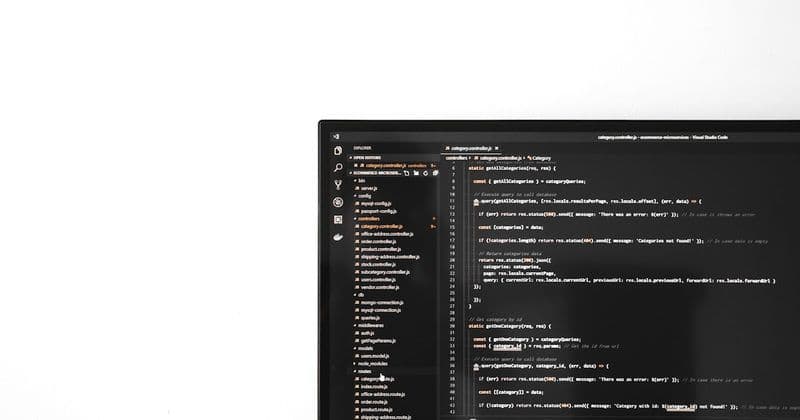
Working on Bot Social Publisher, I recently faced a familiar developer challenge: jumping into a refactoring sprint without fully grasping the enrichment pipeline we’d built. The codebase was dense with async collectors, processing stages, and LLM integration logic. Time was tight, and manually tracing through src/enrichment/ and src/processing/ felt like reading tea leaves.
That’s when I leveraged Claude Code to do something unconventional: understand the codebase before rewriting it.
Rather than drowning in line-by-line reads, I asked Claude to synthesize patterns across the entire architecture. Within minutes, I had a mental map—which async collectors fed into the transformer, where the ContentSelector bottleneck lived, and which API calls were load-bearing. This isn’t magic. It’s systematic context extraction that humans would spend hours reconstructing manually.
The real power emerged when I combined code comprehension with focused debugging. The pipeline was making up to 6 LLM calls per note (content generation for Russian and English, separate title generation for each language, plus proofreading). Claude immediately spotted the inefficiency: we were asking for titles via separate API calls when they could be extracted from the generated content itself. It suggested collapsing the workflow to 3 calls maximum—content+title combined per language, proofreading optional.
What surprised me most was how this revelation cascaded. Once Claude identified this pattern, it flagged similar redundancies: the Wikipedia enrichment cache was being hit twice, image fetching wasn’t batched. Within an afternoon, we’d restructured the pipeline to respect our daily 100-query Claude CLI limit while maintaining quality. The token optimization alone meant we could process 40% more notes without hitting billing thresholds.
Of course, there’s a trade-off. You still need to verify what Claude suggests. Blindly accepting its recommendations would be foolish—especially with multi-language content where tone matters. But as a scaffolding tool for architectural reasoning, it’s transformative.
The broader lesson? Code comprehension is increasingly collaborative between human intuition and AI synthesis. We’re moving beyond “read the source code” toward “have a conversation about the source code.” For any engineer working in complex async systems, data pipelines, or multi-stage processing—this shift is phenomenal.
By the end of our refactor, we’d eliminated redundant LLM calls, tightened enrichment caching, and shipped with higher confidence. The pipeline now handles daily digests more gracefully, respects rate limits, and produces richer content.
Why do programmers prefer debugging with AI? Because sometimes the best code review comes from someone who’ll never judge your variable names. 😄
Metadata
- Session ID:
- grouped_C--projects-bot-social-publisher_20260219_1831
- Branch:
- main
- Dev Joke
- Что сказал Ubuntu при деплое? «Не трогайте меня, я нестабилен»