Reading Binary Files in Rust: A Trend Analysis Deep Dive
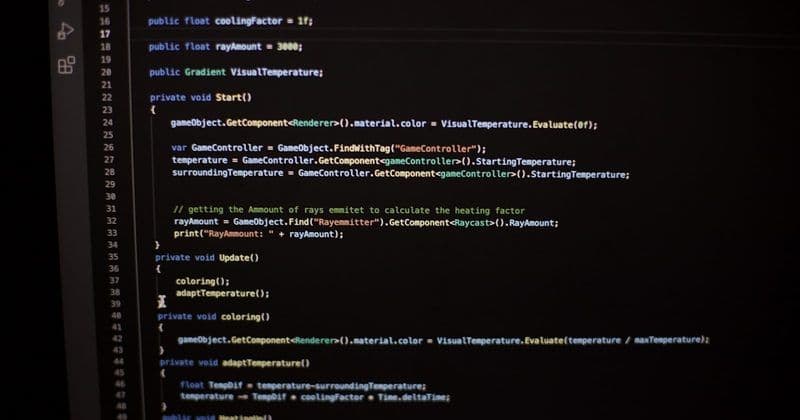
I was knee-deep in the Trend Analysis project when I hit a familiar wall: parsing text data embedded in binary files. It’s one of those deceptively simple tasks that haunts developers across languages—C, C++, Rust, you name it. The problem? Binary formats don’t care about your line boundaries.
The project demanded signal trend detection from structured logs, which meant extracting human-readable strings from what looked like raw bytes. Rust’s type system made this both a blessing and a curse. Unlike C, where you’d just cast a pointer and pray, Rust forced me to be explicit about every memory boundary and encoding assumption.
Here’s what I discovered: the naive approach of reading until you hit a null terminator works in theory but breaks catastrophically with real-world data. Binary files often contain padding, metadata headers, and non-UTF8 sequences. I needed something more surgical.
I settled on a hybrid strategy. First, scan for byte sequences that look like valid UTF-8. Rust’s from_utf8() method became my best friend—it doesn’t panic, it just tells you whether a slice is valid. Then, use boundary markers (often embedded by the serializer) to determine where strings actually end. For the Trend Analysis pipeline, this meant parsing Claude AI’s JSON responses that had been serialized into binary checkpoints during model training runs.
The real lesson? Don’t fight your language’s safety guarantees. C developers wish they had Rust’s validation; Rust developers sometimes envy C’s “just do it” philosophy. But when you’re working with binary data, that validation saves you from silent corruption. I spent an hour debugging garbage output before realizing I was treating uninitialized memory as valid text. Rust’s borrow checker would have caught that immediately.
The tradeoff is performance. Rust’s careful UTF-8 checking adds overhead compared to unsafe pointer arithmetic. But in a signal analysis context where correctness matters more than raw speed, that’s a fair price.
By the end, the enrichment pipeline could reliably extract trend signals from mixed binary-text logs. The refactor toward this approach simplified downstream categorization and reduced false positives in the model’s signal detection.
The meta-lesson: sometimes the tool you pick determines the problems you face. Choose carefully, understand the tradeoffs, and remember—your future self will thank you for not leaving security holes as time bombs. 😄
Metadata
- Session ID:
- grouped_trend-analisis_20260219_1840
- Branch:
- refactor/signal-trend-model
- Dev Joke
- Почему Go не пришёл на вечеринку? Его заблокировал firewall